A continuous intelligence loop for your workforce

TalentJam connects skills, performance, engagement, and workforce planning into one cohesive system anchored in formally recognised and custom skills frameworks (including SFIA) and continuously updated as your organisation evolves.

Book a demo View service tiers →
How it works

Five stages. One closed loop.

TalentJam's operational loop turns skills data into action continuously, not once a year.

Inference
Stage 1
Inference
Regulatory sources, position descriptions, and service catalogues are processed through the Skills Baseline to produce structured role profiles and skills frameworks.

Assessment
Stage 2
Assessment
Self-assessment, manager moderation, and peer endorsement build a three-dimensional picture of actual skill levels across your workforce.

Performance
Stage 3
Performance
Skills data feeds into performance reviews, goal-setting, and development planning. The connection between skill and outcome becomes measurable.
Calibration
Stage 4
Calibration
Calibration tools and work-flows ensure consistency and fairness across teams, business units, and organisations. Human expert review validates any AI-generated outputs.

Pathways
Stage 5
Pathways
Identified gaps drive development pathways, internal mobility and succession, and learning recommendations. Close the loop with leading engagement indicators.
Skills Inference

The Skills Baseline: from sources to intelligence

TalentJam's skills intelligence is produced by a systematic, documented artifact chain — not ad-hoc AI prompting or manual framework mapping. Each step in the chain produces a validated output that feeds the next.

📄
Sources
Regulatory sources, position descriptions, service catalogues
📋
Service Catalogue
Structured service inventory with capability requirements
🗂️
ISF
Inferred Skills Framework, cross-referenced to standard and custom frameworks
👤
Role Profiles
Framework-aligned role profiles with behavioural indicators
📊
Skills Matrix
Current capability mapped against role requirements
🎯
Gap Analysis
Actionable intelligence for executive and regulatory reporting

Each artifact is validated before proceeding to the next stage. The chain is documented at SOP level and repeatable across organisations.

Skills editor
Skills & Frameworks

Complete visibility into capability across your whole organisation

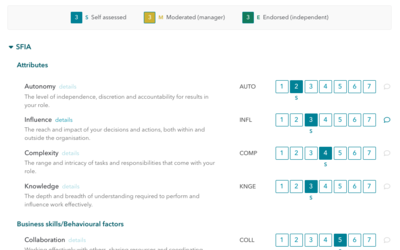
TalentJam supports SFIA, the Data Capability Framework (DCF v2.1), Policy Skills Framework (PSF), and fully custom frameworks. Every skill has a structured definition, level descriptors, and assessment criteria rather than being just a tag in a database.

  • SFIA levels 1–7 with full descriptor support
  • APS, DCF and PSF coverage for public sector roles
  • Standardised sector skill and role frameworks for industry verticals (Retail, Finance, Data Science, etc)
  • Custom skill and competency library for organisation-specific needs
  • Self-assessment, manager validation, and external endorsement
  • Skills matrix view across team, unit, division, and enterprise
  • Skill finder to identify who in your organisation holds a given capability
Skills assignment view
Capability mapping

Know exactly where your capabilities are, and where they are not

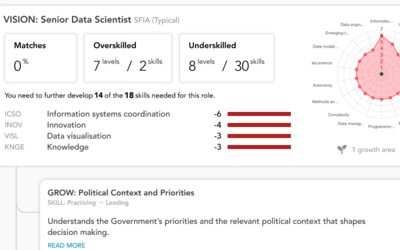
Move beyond headcount to capability intelligence. Identify who in your organisation holds a particular skill, at what level, and where gaps exist against role requirements, project demands, or strategic priorities.

  • Gap analysis against role profiles, framework targets, or strategy requirements
  • AI displacement risk mapping by skill and role family
  • Workforce planning integration, so you know what you will need before you need it
  • Exportable skills matrices for executive and regulatory reporting
Review feedback interface
Performance

Reviews that connect to skills. Goals that connect to outcomes.

TalentJam's performance module replaces standalone tools like Lattice and 15Five with reviews, goals, and feedback that are anchored in the skills framework, so development conversations are grounded in evidence, not impressions.

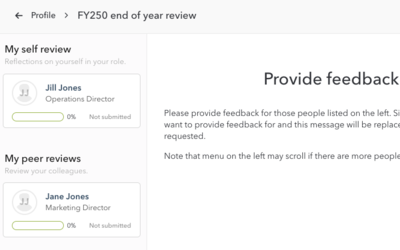
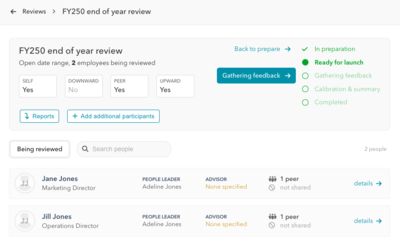
  • Peer, manager, and 360-degree feedback with structured templates
  • Assessment against role expectations, capability frameworks, or custom rubrics
  • Calibration tools for fair, consistent rating across teams
  • Goals and OKRs at individual, team, and organisational levels
  • Personal Development Plans (PDPs) with automated tracking and reminders
  • Performance data connected to skills gaps and development pathways
Review administration
Calibration & analytics

Data-driven talent decisions, not gut feel

Intuitive calibration and analysis tools give HR teams and executive leadership the evidence to make talent decisions they can defend; to their board, their people, and their regulators.

  • Calibration views across any organisational unit
  • Trend analysis to track performance patterns over time, not just at review time
  • Manager effectiveness signals integrated with engagement data
  • Export-ready data for board reporting and regulatory submissions
Pathways feature
Pathways

Clear career progression. Supported by data, not guesswork.

TalentJam's Pathways feature gives every employee a data-driven view of where they can go and what they need to get there, whether that's upward progression, lateral movement, or a completely new direction.

  • Aspiration-based roles — where they want to go
  • Best-fit roles — where they're already well-qualified
  • Logical next steps — data-driven progression suggestions
  • Organisational growth roles — aligned with strategic priorities
  • Current vacancies — matched to existing skill profiles
  • Training links to LMS, online platforms, and external providers
Demand Management

Workforce planning connected to real world resource and financial context

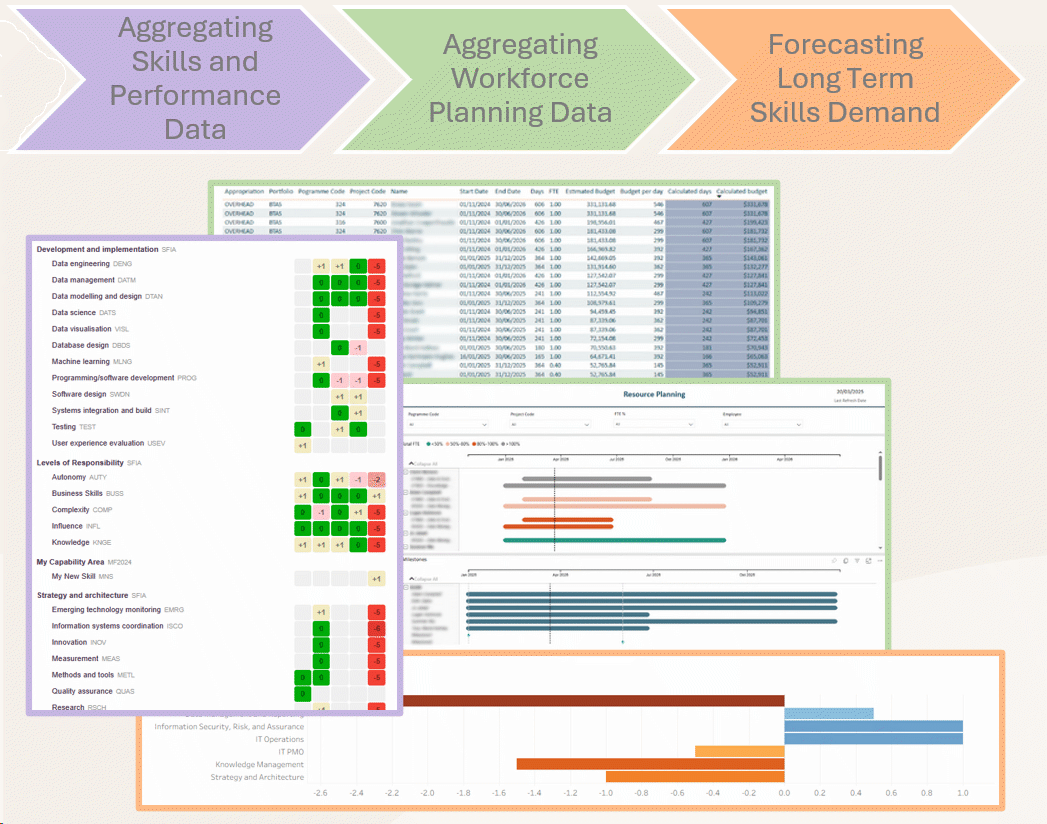
Demand Management bridges the gap between skills intelligence and organisational resource planning. FMIS ingestion of project codes and budgets, mapping and forecasting of resource supply and demand (with gap analysis).

Optional cross-agency resource allocation and an aggregated regulator view for APS/PSC (for participating organisations) make this the only workforce planning module explicitly designed to meet NZ/AU public sector requirements.

  • FMIS ingestion — workforce planning connected to financial management data, so you can see project and BAU workforce demand in one place
  • Cross-agency resource allocation and benchmarking
  • APS and PSC/GDDA regulator views for compliance reporting
  • Demand forecast vs current capability gap analysis
  • Project and programme resource planning with skills matching
  • Succession planning integrated with skills and performance data
Public sector overview →
Demand management dashboard

See the platform in action

Book a 45-minute demonstration tailored to your organisation's context — public sector, mid-market enterprise, or AI-native workforce planning.